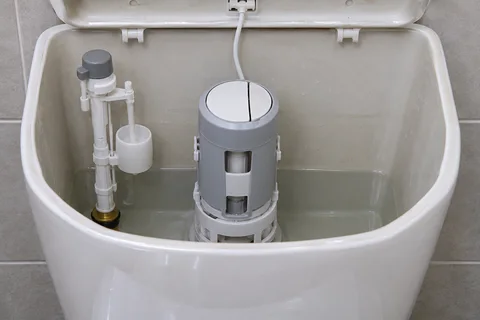
If water keeps trickling into the bowl after the flush, the cistern may be filling too high or letting water past its flush seal. A slow refill, a silent cistern and a button that does nothing each point us towards different checks.
Match what you notice to the parts we would check. Toilet designs vary.
1 Fill valve
The cistern won’t fill or won’t stop filling
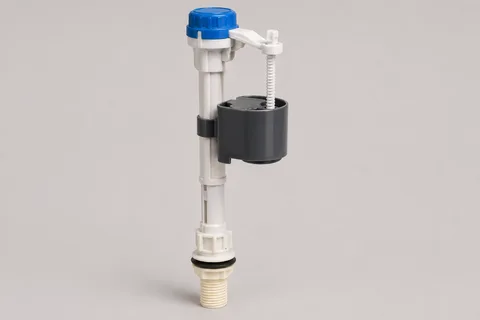
This valve lets water in after a flush. Its float tells it when to stop. We check the supply if the cistern stays empty, and the float and shut-off if it keeps filling.
Fluidmaster 400UK073 bottom-entry fill valve
This example uses a ½-inch bottom inlet. A cistern fed through the side needs a side-entry type, such as the Fluidmaster 747UK where compatible. We also check the available height and float clearance.
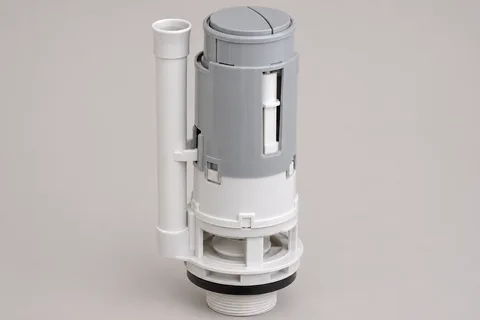
The valve releases the stored water when you flush. If the seal at the bottom won’t close, water can keep trickling into the bowl.
Fluidmaster PRO550UK cable flush valve
This dual-flush example is designed for 1½-inch and 2-inch outlets. We also check the overflow height, lid clearance and how the button operates. A sound valve body may only need the correct replacement seal.
The button operates the flush through a cable, rods or another link, depending on the cistern. We check the control and the connection.
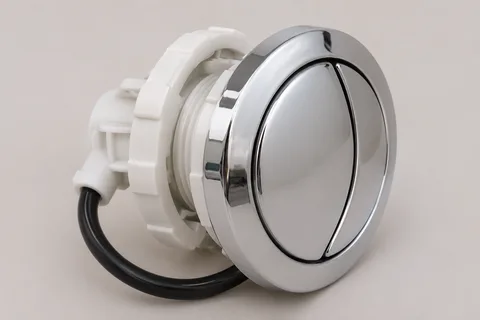
Fluidmaster C220 chrome-effect cable button
The C220 fits the manufacturer’s 550-series cable valves. A similar-looking button can use rods or an air tube instead. We check the existing mechanism and the opening in the lid or panel.
The cistern keeps filling and water goes down the overflow
The float controls when the fill valve should shut. We check its setting and can adjust the shut-off level where appropriate. If the valve fails to stop the water at the correct level, we can replace it with a compatible part.
Water trickles into the bowl without overflowing
If the cistern water is below the overflow and a trickle continues between flushes, the flush valve or its seal may be letting stored water through.
The cistern takes a long time to refill
We check the local isolation valve first, where one is fitted, then look at the fill valve and its condition. Tell us if the refill has gradually slowed or stopped working after other plumbing work.
The cistern is empty and no water comes in
We check whether water reaches the fill valve. If the valve has a supply but does not admit water, it may need replacement. If the supply does not reach the valve, we discuss investigating the pipework separately.
The cistern refills by itself every few minutes
Water may be leaking slowly from the cistern into the bowl. When the level drops far enough, the fill valve opens again. We look for where water is escaping before replacing a part.
The push button or handle does not flush
The control can become loose, stick or stop moving the mechanism. Depending on the cistern, it may use rods, a cable, an air tube or a lever.
The flush is weak or only one button works
We check how much water the cistern releases and whether the mechanism opens when you press the button. If water enters normally but rises and drains slowly, we check the waste route.
What the parts do
01Fill valve or inlet valve
This lets water into the cistern after a flush and shuts off at the correct level. The location of the inlet hole tells us whether the replacement needs a side or bottom entry.
02Flush valve or siphon
This releases water from the cistern when you flush. Some toilets use a siphon. With a flush valve, a seal that does not close properly can let water creep into the bowl.
03Button, handle and linkage
These tell the flush mechanism to open. We check how the button or handle connects to the mechanism before deciding which part needs work.
What we can do
We assess how the cistern fills, holds water and flushes. Where accessible and appropriate, we can replace compatible inlet valves, flush valves, seals or controls and check the refill and flush after repair.
Parts we may check or replace
These are examples. We check what is fitted before choosing a replacement.
Fluidmaster 220CR113 flush seal and button kit
A worn drop-valve seal can let water into the bowl between flushes. This kit includes a seal for specified Fluidmaster cable valves, including the PRO550UK. We identify the valve and check the sealing surface before choosing a seal or a complete valve.
Tell us whether water is running into the bowl or onto the floor, whether the cistern refills, and whether this is your only toilet. A photo of the toilet and flush button helps. Leave a fixed panel in place.
Send a photo of the whole toilet and the flush button or wall plate. It helps us identify the layout and discuss access before a visit.
A cistern you can see
If the cistern sits on the pan or is mounted visibly on the wall, its working parts can usually be reached through the top. The space around it and the pipe connections can still affect the job.
A cistern in a furniture unit
On some back-to-wall toilets the floor-standing pan blocks removal of the front panel. We check the access first. If the pan needs to come out to remove that panel, we agree the extra work and how it will be refitted.
A separate cistern behind boxing or tiles
We check whether the existing opening reaches the faulty part. Some cisterns can take compatible standard valves. If a larger part or the cistern itself cannot come out through the opening, we discuss what needs to be opened and agree the scope before work.
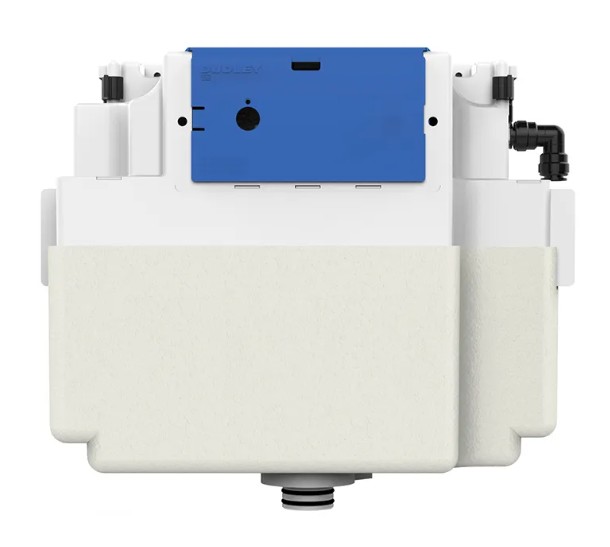
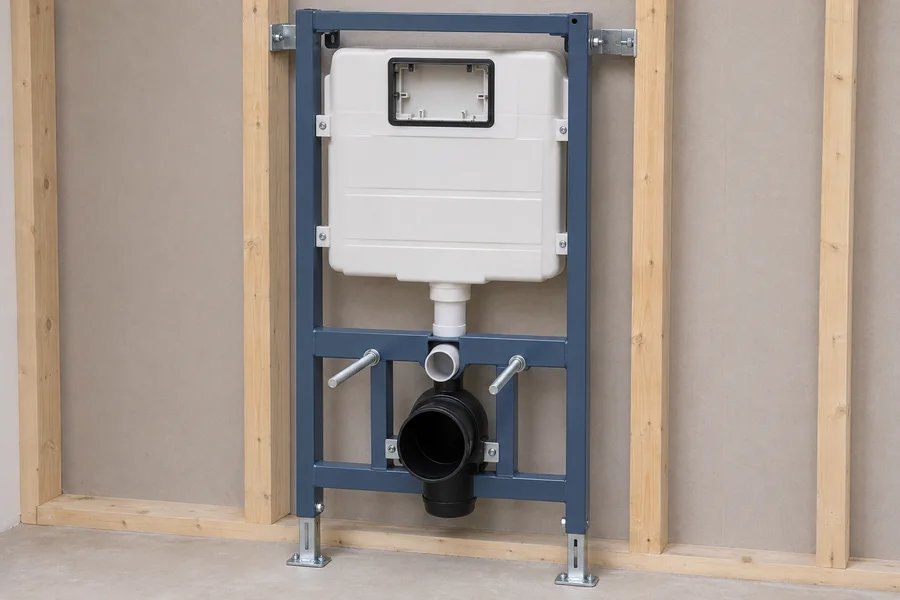
The frame supports the pan and houses the cistern. We identify the model before ordering a part and check the manufacturer’s compatibility list. Some parts can be serviced through the flush plate. Work beyond that opening can require access through the boxing.
The flush pipe carries water from a separate cistern to the toilet pan. Either end can leak, at the cistern outlet or where the pipe enters the pan. We check those seals as well as the separate waste connection. Reaching a hidden seal can mean removing the pan or opening part of the boxing.
Planning your visit
What happens next
01
Describe the job
Send your postcode, what is happening and a photo if it helps. Tell us if water is still escaping.
02
Agree the visit
We confirm availability and explain the basis of any attendance or investigation charge before booking.
03
Agree and check the work
We explain what we find, agree any further work and check the affected plumbing afterwards.
Common questions
How can I tell a fill valve fault from a flush valve fault?
A fill valve that will not shut can send water down the overflow. A leaking flush seal can let the stored water level fall and cause repeated top-ups. We check the water level and how the fittings behave to tell them apart.
Is a puddle around the pan the same as a running cistern?
A trickle inside the bowl points us towards the cistern. Water on the floor can come from the cistern, supply or waste connection. If there is a leak outside the toilet, tell us when it appears.
Can you repair a concealed cistern without removing tiles?
Some cisterns can be serviced through the flush plate or an existing panel. We check which part needs attention and what the opening lets us reach. If more access is needed, we agree the scope with you first.
Can you give me an estimate?
We discuss the work and the basis of any attendance or investigation charge before booking. Where the fault or access is uncertain, we may need to assess it first. We discuss any change to the agreed scope before additional work.